
Search Michigan Arrest Records
Michigan arrest records are held by the Michigan State Police, county sheriff offices, and local courts across all 83 counties. You can search criminal history through the ICHAT portal, look up current inmates through county jail databases, or request records directly from law enforcement. This page guides you through every tool and resource for finding Michigan arrest records at the state, county, and city level.
Michigan Arrest Records Overview
How to Find Michigan Arrest Records
Michigan uses several systems to make arrest and criminal history records available to the public. Each system covers different types of records. The Michigan State Police runs ICHAT, which is the main source for statewide criminal history. OTIS tracks offenders under state corrections supervision. County sheriffs maintain jail rosters and booking records. Courts hold case files with charges, dispositions, and sentencing details.
The right source depends on what you need. If you want a full criminal history report that covers all 83 counties, ICHAT is the place to start. It costs $10 per search and returns felony arrests, serious misdemeanor arrests, and convictions on file. For someone currently in jail or recently booked, check the county sheriff's inmate search tool. For court records on a specific case, use the Michigan Court Case Search at courts.michigan.gov/case-search/.
Records not available through online portals can be requested under the Michigan Freedom of Information Act, MCL 15.231 et seq. This law gives you the right to ask for public records from any government agency. Law enforcement, courts, and county offices must respond within 5 business days. They can extend that by 10 more days if they give written notice. Most routine records come back quickly. Some records are exempt, but agencies must tell you why they are withholding anything.
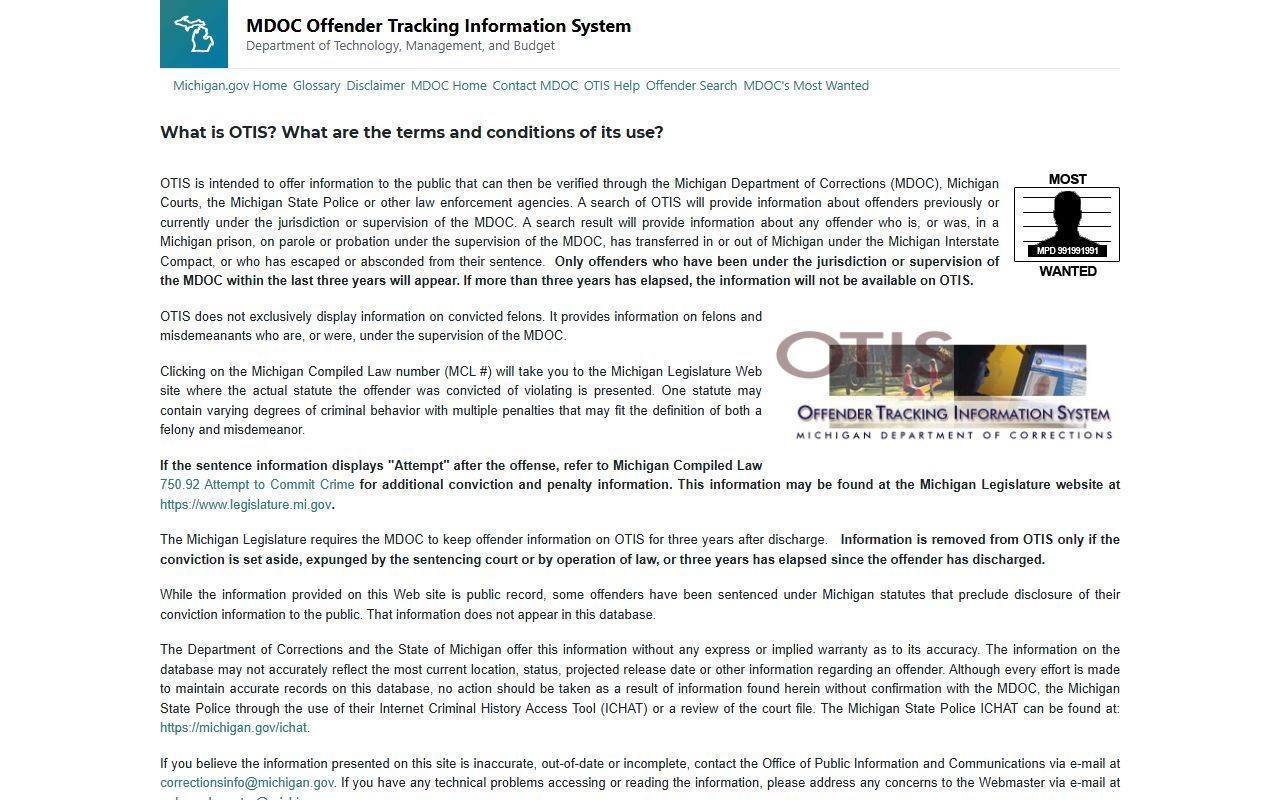
The Michigan Department of Corrections OTIS database lets you search for prisoners, parolees, and probationers currently or recently under state supervision. Visit OTIS offender search to run a name-based or MDOC number lookup.
Michigan ICHAT Criminal History Search
The Internet Criminal History Access Tool, known as ICHAT, is the official public portal for Michigan criminal history records. It is run by the Michigan State Police Criminal Justice Information Center. You can access it at apps.michigan.gov. The system is available 24 hours a day, 7 days a week. Each search costs $10, paid by MasterCard or Visa.
ICHAT covers all 83 Michigan counties and pulls from the same database law enforcement uses. It shows felony arrests, serious misdemeanor arrests (those punishable by more than 93 days), charges, and convictions. Results include the person's full name, aliases, date of birth, height, weight, eye color, hair color, offense descriptions, MCL numbers, arrest dates, and disposition information. Records are updated daily. Under MCL 28.241 et seq., all felonies and serious misdemeanors must be reported to the state and added to this system.
To run a search, you need the person's first name, last name, date of birth, race, and gender. The system does an exact match on names. ICHAT does not include expunged or set-aside records, warrant information, federal records, tribal records, traffic records (unless criminal), juvenile records, or misdemeanors under 93 days. If you need tutorials on how to use the site, ICHAT offers guides at apps.michigan.gov/Home/Tutorials. For common questions, visit the ICHAT FAQ page. For support, call 517-241-0606.
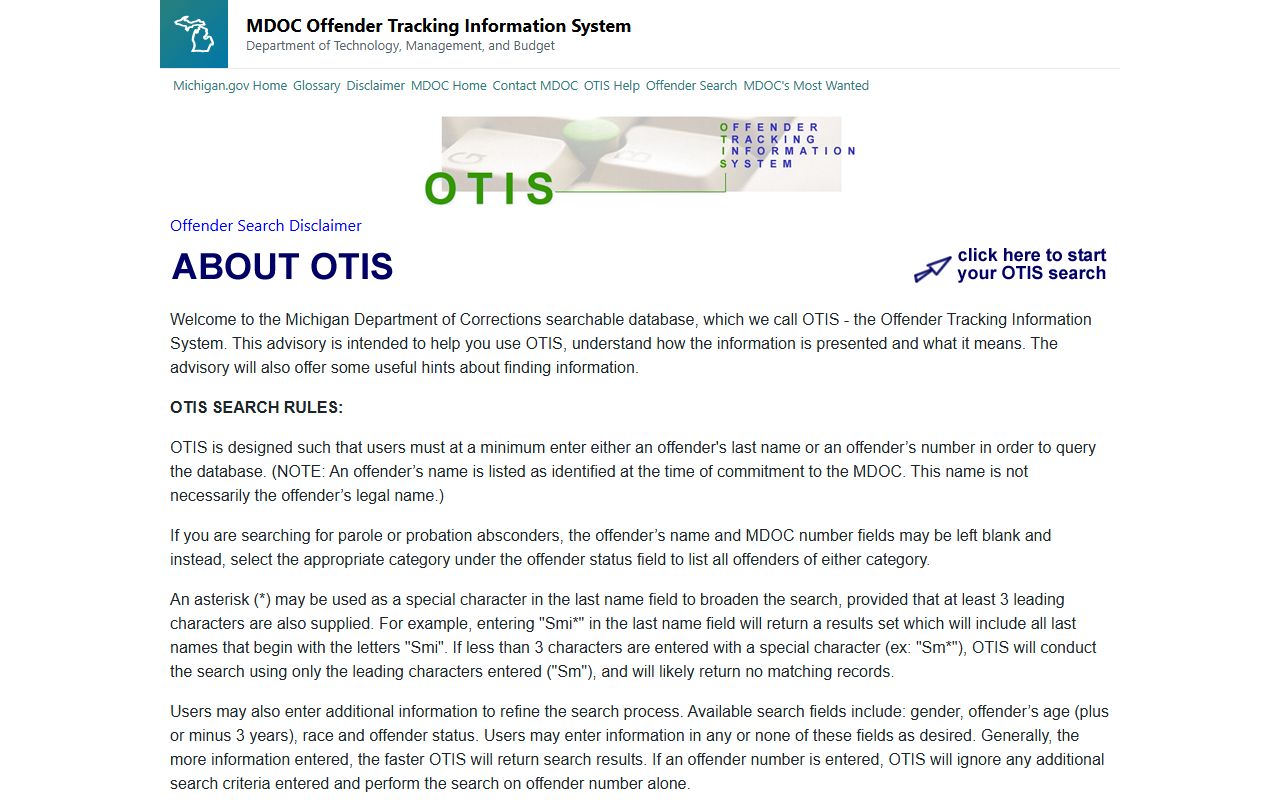
The OTIS about page at mdocweb.state.mi.us/otis2/aboutotis2.aspx explains the scope and limits of the corrections tracking system, including which offender statuses appear in search results.
OTIS Offender Tracking System
The Offender Tracking Information System, or OTIS, is a public database managed by the Michigan Department of Corrections. It covers prisoners, parolees, and probationers under MDOC supervision within the past three years. You can search by last name or MDOC number. Optional filters include gender, age, race, and offender status. A wildcard search lets you use an asterisk after at least three characters, so "Smi*" returns all last names starting with "Smi." Search OTIS at mdocweb.state.mi.us/otis2/otis2.html.
Each offender profile in OTIS shows the MDOC number, name at time of commitment, date of birth, sex, race, controlling offense MCL number, current location or supervision, status code, earliest release date, maximum sentence date, and parole date if applicable. Status codes tell you where someone stands: PRISON means currently locked up, PAROLE means released to community supervision, PROB means circuit court probation. ABSCOND1 means the person has absconded from parole, while ABSCOND2 means from probation. OTIS does not include county jail inmates unless they were transferred to state prison.
Note: OTIS removes records three years after a person is discharged from MDOC supervision. If someone finished their sentence more than three years ago, they will not appear in the database.
Michigan Public Sex Offender Registry
The Michigan Public Sex Offender Registry, called PSOR, is managed by the Michigan State Police. It lists convicted sex offenders who are registered in Michigan. You can search by name, registration number, or geographic area at mspsor.com. The map-based search lets you enter a street address, city, ZIP code, or county and pick a search radius. The registry also has special lists for non-compliant offenders and incarcerated offenders. For the search form, go to mspsor.com/Home/Search. For questions, call 517-241-1806.
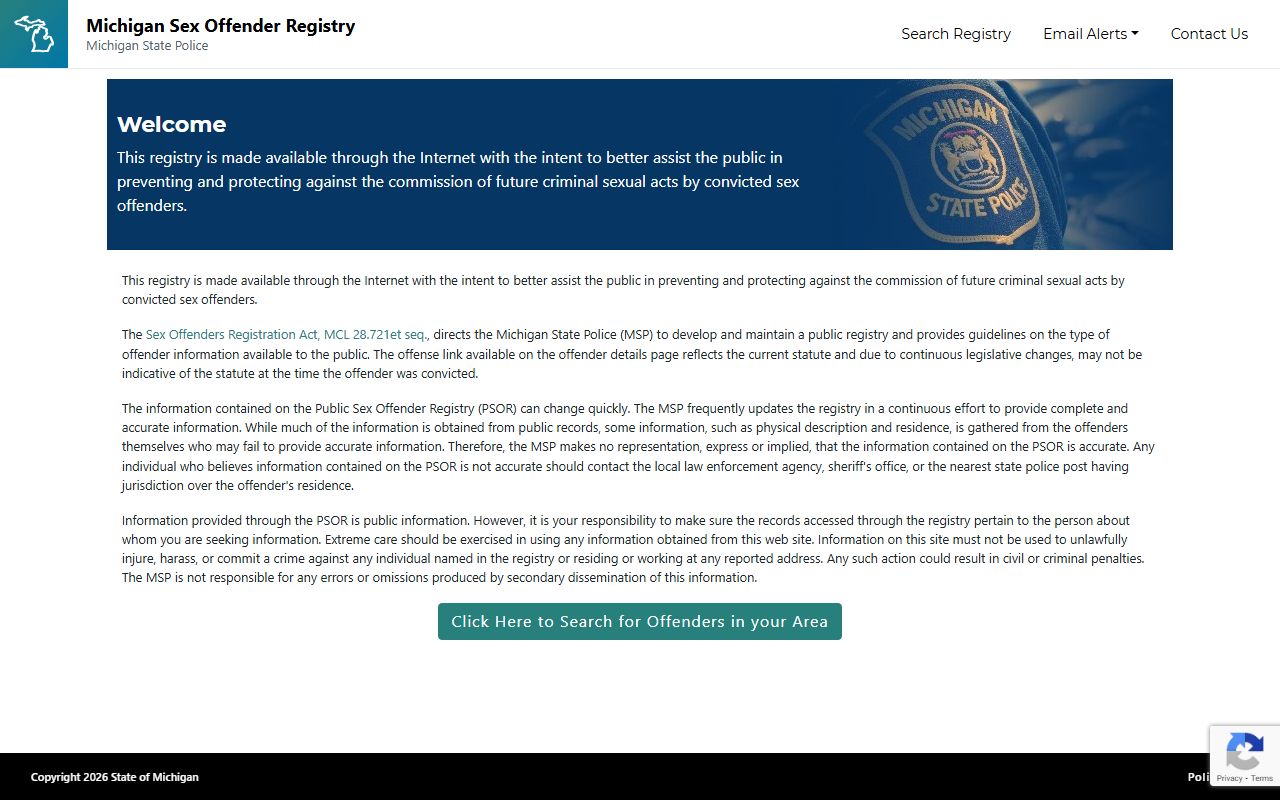
The Michigan sex offender registry homepage at mspsor.com provides a neighborhood map tool, name search, and signup for email notifications when a registered offender moves near you.
Each registry entry includes the offender's full name and aliases, date of birth, physical description, residential address, offense details, MCL violations, compliance status, photograph, vehicle information, and in some cases email addresses and employment information. You can sign up for email alerts to be notified when a specific offender's status changes. The legal authority for this registry comes from the Sex Offenders Registration Act, MCL 28.721 et seq.
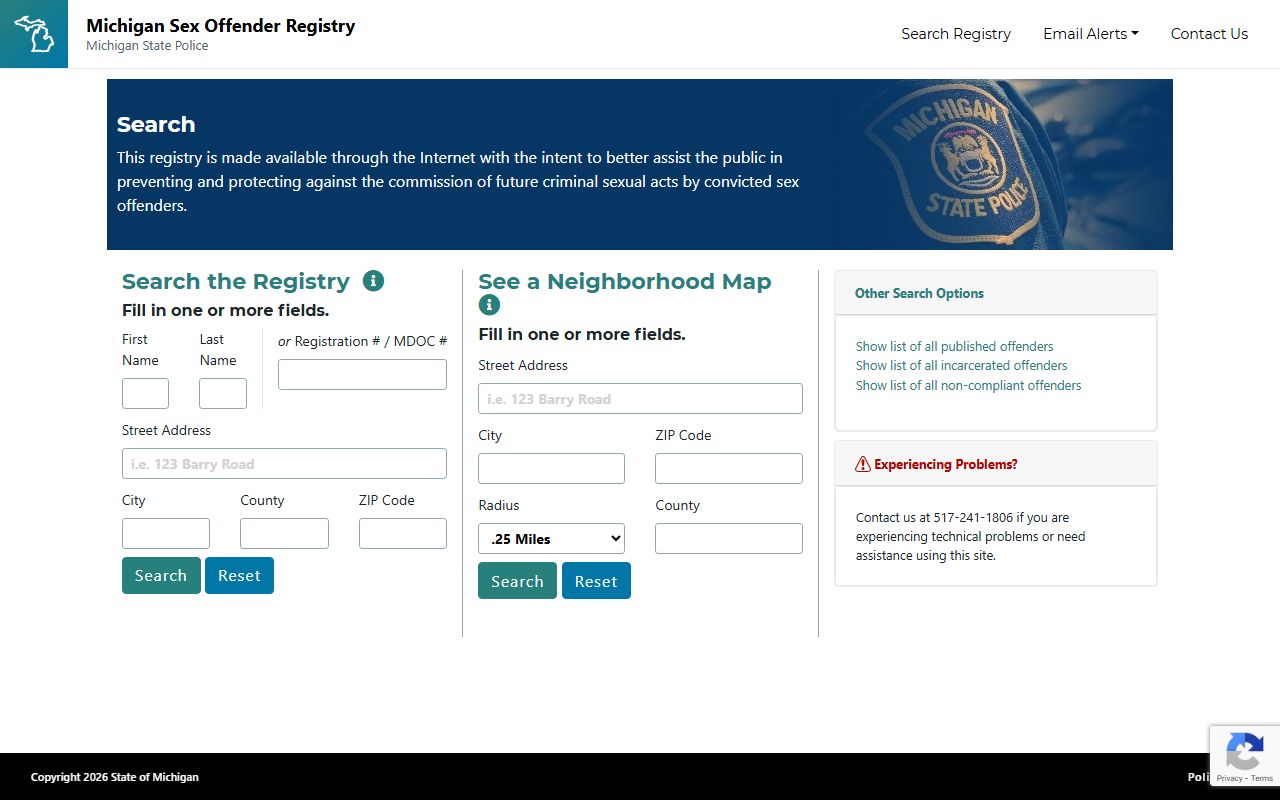
The PSOR search form at mspsor.com/Home/Search allows name searches, registration number lookups, and area-based map searches with a custom radius setting.
Michigan Court Case Search
Michigan courts make criminal case records available through the court case search portal at courts.michigan.gov/case-search/. This free tool covers circuit courts, district courts, and other courts across the state. You can search by name or case number. Results show party names, charges, court dates, case status, and basic docket entries. The Michigan Courts homepage is at courts.michigan.gov.
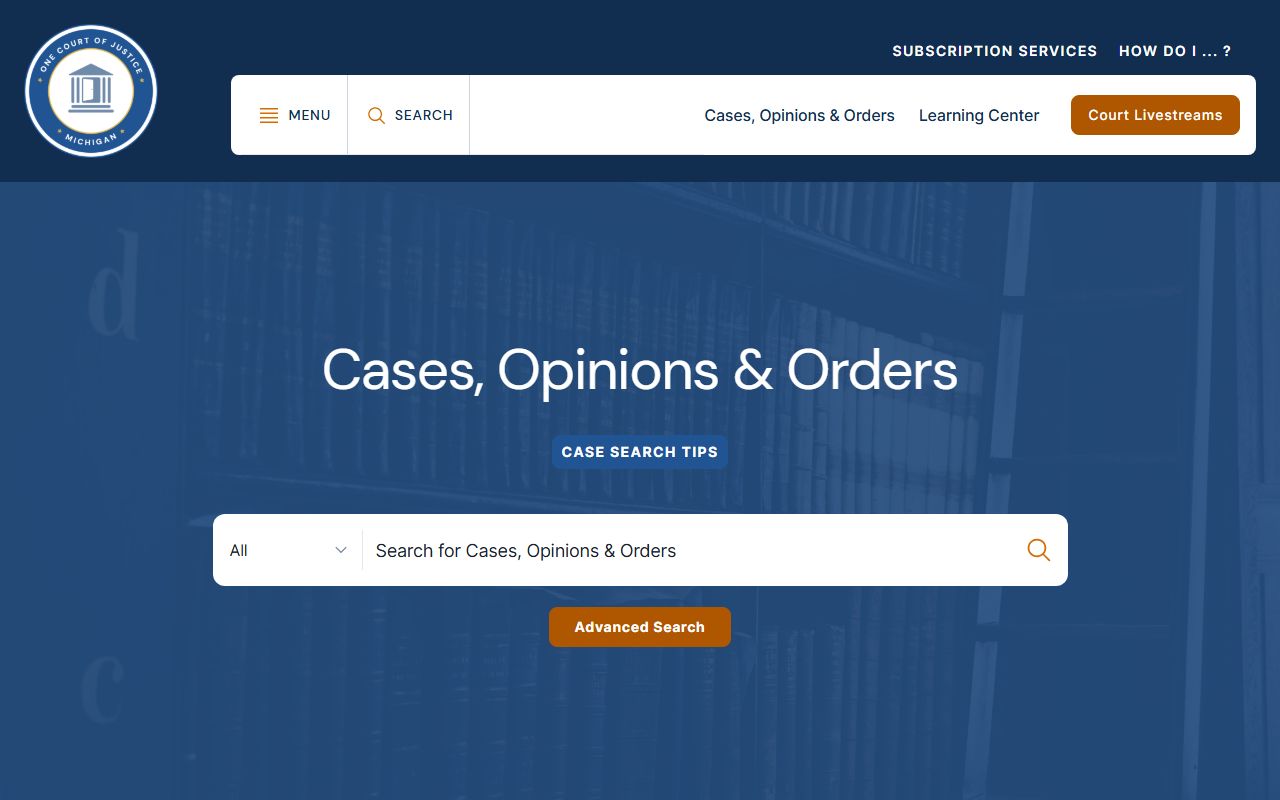
The Michigan court case search portal allows free public lookups by name or case number, returning charge information and case status for criminal, civil, and other case types statewide.
Court records show what was charged, how the case was handled, and what the outcome was. Circuit courts handle felony cases. District courts handle misdemeanors and ordinance violations. If you want to see more detail than the online portal shows, you can visit the clerk's office at the courthouse in the county where the case was filed. Certified copies of court records typically cost around $1.50 per page plus $10 for certification, though fees vary by court.
Requesting Michigan Arrest Records Under FOIA
The Michigan Freedom of Information Act, MCL 15.231 et seq., gives the public the right to request records from government agencies. You can use FOIA to get police reports, incident reports, arrest logs, booking photos, and other records that are not available online. The law covers all public bodies in Michigan, including the Michigan State Police, county sheriffs, city police departments, and courts.
To make a FOIA request, you must do so in writing. Include your name, mailing address, and a description of the records you want. Be as specific as you can. Include the incident date, location, names involved, and report number if you know it. General or broad requests can take longer and may require a deposit. Agencies have 5 business days to respond. They can extend by 10 more days if they give written notice. If your request is denied, they must explain why and tell you how to appeal.
For Michigan State Police records, submit requests through the MSP FOIA portal at michigan.gov/msp/services/foia. A MILogin account is required. You can request body camera footage, dash camera footage, incident reports, traffic crash reports, and other public records. The MSP Records office can also be reached at 517-241-1934 or by email at MSPRecords@michigan.gov. FOIA copying fees are 4 cents per page for black and white and 9 cents per page for color. Labor is billed in 15-minute increments. Fee waivers may be available if the request is in the public interest.
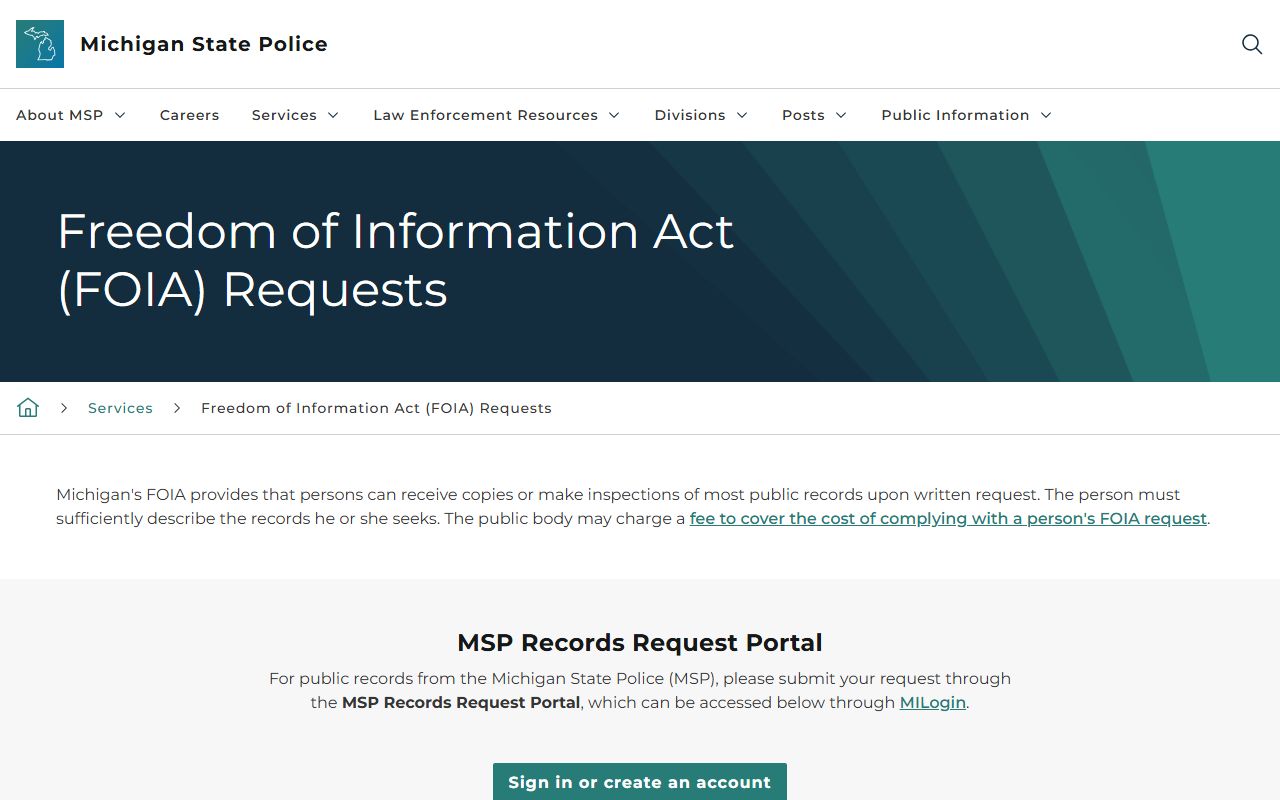
The MSP FOIA portal at michigan.gov/msp/services/foia lets you submit online requests, track their status, and download responsive records through a secure MILogin account.
Michigan Clean Slate and Record Expungement
Michigan's Clean Slate legislation, effective April 11, 2023, created an automatic set-aside process under MCL 780.621g. Eligible records are removed from public view automatically without requiring a petition. Up to two felony convictions can be set aside after 10 years. Up to four misdemeanor convictions of 93 days or more can be set aside after 7 years. Some 92-day misdemeanors also qualify after 7 years.
Not all convictions are eligible for automatic set-aside. Excluded offenses include assaultive crimes, serious misdemeanors, crimes of dishonesty, offenses punishable by 10 or more years, offenses involving minors or vulnerable adults, and crimes involving firearms. Traffic offenses are also excluded. When a conviction is set aside, it is removed from ICHAT and public court records. Law enforcement agencies can still see it through the Law Enforcement Information Network (LEIN). If you want to know whether a specific conviction qualifies, resources are available through Safe and Just Michigan.
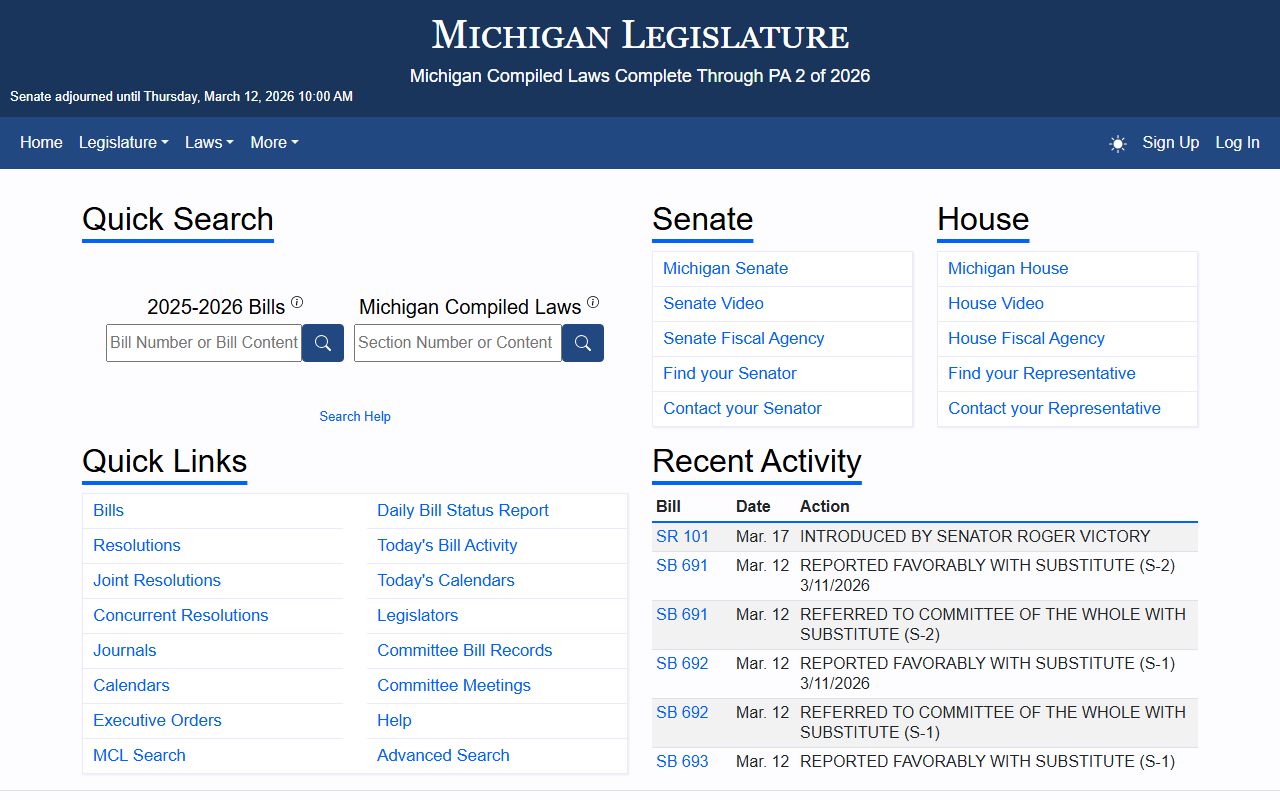
The Michigan Legislature's website at legislature.mi.gov is the official source for all Michigan Compiled Laws, including statutes governing criminal history records, FOIA, and the Clean Slate expungement process.
Note: An arrest that did not result in a conviction is different from a set-aside. Arrests appear in jail booking logs but do not always result in criminal history records under MCL 28.241.
Michigan Arrest Records by County and City
Arrest records in Michigan are kept at both the state and local level. State databases like ICHAT and OTIS give you a broad view. County sheriff offices hold booking records, jail rosters, and inmate details specific to their area. City and township police departments handle their own records for incidents that happen within their jurisdiction. Felony cases flow from local arrest to county circuit court. Misdemeanor cases go to district court.
Each of Michigan's 83 counties has its own sheriff's office, jail, and court system. Some counties have robust online tools. Wayne County has the inmate inquiry portal at inmateinquiry.waynecounty.com. Oakland County uses the CLEMIS system at apps.clemis.org. Kent County offers the Web Jail Viewer at eisjailviewer.kentcountymi.gov. Macomb County's inmate search is at macombgov.org. For counties without dedicated online portals, ICHAT and the Michigan Court Case Search remain the best starting points.
Use the links below to go directly to the county or city page for local contact details, search tools, and records access options specific to that area.
Browse Michigan Arrest Records by County
Each Michigan county has its own sheriff, jail, and court system that handles arrest records for that area. Pick a county to find local contact info, inmate search tools, and records access options.
Michigan Arrest Records by City
City and township police departments maintain their own arrest records. Select a city to find the local police department, district court, and inmate search resources for that area.